
If you’ve seen the last series of posts, then you know I was having gut issues with Keira. Changing her diet made a world of difference. I’m not an equine nutritionalist but I am a dedicated horse mom who wants what is best for her ponies. That meant digging in deep to what I was currently feeding and what would be the best changes to make.
In order to do this I had to do a TON of research. I needed to learn all about mineral balancing, feed ingredients, proper feeding rates, etc. Too say the information was overwhelming would be an understatement. There is so much out there and some of it is conflicting. So many different opinions with very little studies being conducted.
I am relying solely on the word of professionals who know more about it than I do. That being said, I want to share with you some of the sources I pulled information from to build a nutrition plan.
Sources for Nutrition
- Dr. Kellon’s Blog – Dark Horse Sense
- ECIR Group aka Equine Cushings and Insulin Resistance
- Mad Barn Nutritional Posts
- Kentucky Equine Research aka KER
- Various Equine Colleges
- Scoop & Scale Podcast
- Feed Room Chemist Podcast
- The Equine Connection Podcast
- Horse Nutrition Groups on FB
These are just a fraction of websites too. I spent weeks going down the rabbit hole and collecting all the information I could and enjoyed it too! I love researching and learning. Why I didn’t follow a career path in that is beside me. I really should have!
I compiled all this information so I could share the important parts with you. Hopefully this will help your horses be as healthy as possible! I want you to be able to analyze your horses diet too. That being said, I really loved doing the research and creating spreadsheets. If you would like help with this, I’m going to be offering my services for a small fee! I’ll do the research and compile the spreadsheet for you!
Building a Nutrition Plan
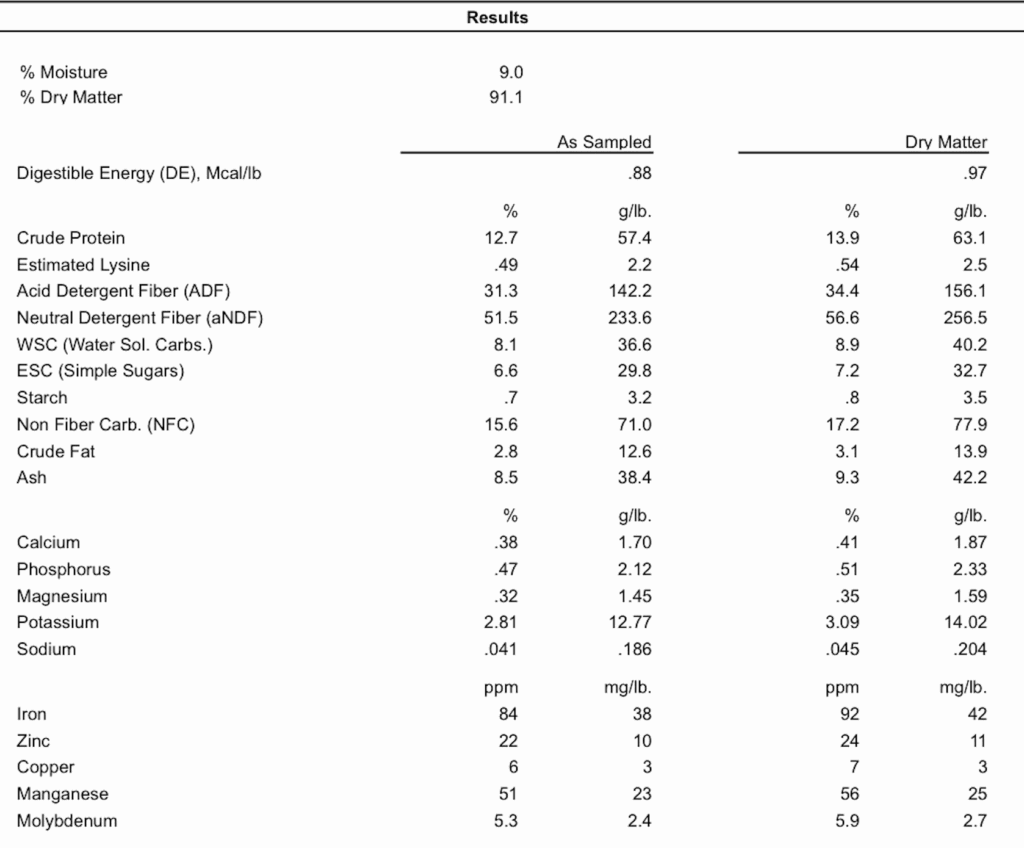
- Step 1 – Gathering all the information for what you are currently feeding. This includes – hay analysis, water analysis (if you want to be real picky), feed tag lists and even grass analysis. Here’s a look at the latest hay analysis I had done. I also did a well water analysis to find out how much of all the minerals were in each. Specifically looking at copper, iron and zinc.
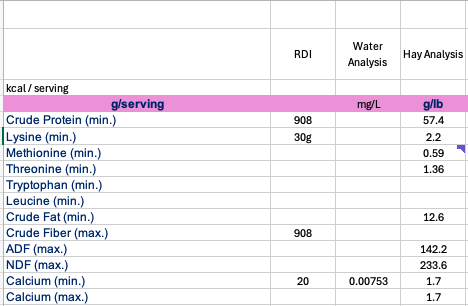
- Step 2 – Put all the information into a spreadsheet. Make conversions so all ingredients are listed in the same form. Here’s a look at part of what I put together.
- Step 3 – Measure your horse and use this horse weight calculator to get the most accurate weight. There are plenty of charts on the web that show how much a horse should weight based on height and breed.
- Step 4 – Now that you know what your horse weighs, you can determine if they need to be on a maintenance diet, cut back or fed more. You’ll need this information in order to get an accurate picture of what you’ll be feeding.
- Step 5 – Using your horse weight, find the recommended feeding rate per your feeds feeding label. Most will list out what a horse should get based on weight or level of activity. Now, tally up all the ingredients. This information you’ll use to determine where you need to supplement due to minerals lacking.
Diet Results
What I found is that my horses were getting too much iron and not enough copper and zinc. I knew this because all the research was consistent in saying 4:3:1 was the ration for iron:zinc:copper.
Knowing I wanted to switch them to a hay based diet, I would need to supplement additional “essential amino acids” if I wanted to maintain a well developed top line.
Putting together the spreadsheet, helped me analyze the cost of making feeding changes too. I was able to see what the cost of the current diet was versus the cost of implementing changes. While I want my horses to be as healthy as possible, I still have to be realistic about costs.
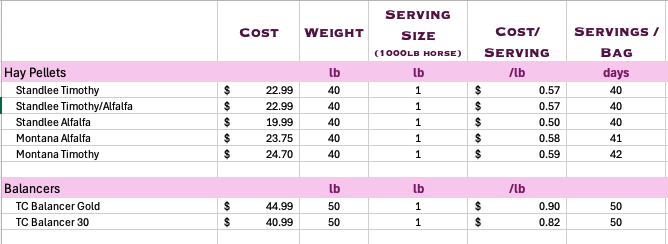
Now keep in mind, I’m only showing you a small glimpse of my spreadsheet. What you’re not seeing is the 10 different tabs that include NRC recommendations, research on mineral ratios, horse weight records, etc. Nor are you seeing a complete list of all the feeds and supplements I pulled data for. Just to give you an idea, I pulled feeding data for various Triple Crown feeds, all the Standlee hay pellet types, various hay balancers, various diet balancers, various supplements, etc. I now have a well built out template I can use to analyze my horses diet and change/add new products as I introduce them into the plan.
A Must Do
As mentioned before, pulling all this information and analyzing my horses diets gave me useful insights into where their diets were lacking. It allowed me to then research how those lacking nutrients affect their behavior and bodies so I would know if that was a potential cause of their problems. In some cases, I do believe it was and after changing their diet for a few months I saw improvements.
I would highly recommend if you have never analyzed your horses diet, you should! If you feed multiple supplements its even more important that you do because you could be created imbalances in certain minerals/vitamins. Not to mention, you could be wasting your money on supplements that aren’t needed or they are peeing out! I like to count my pennies and if you do too, gathering this information can save you a lot of money and keep from wasteful spending. And did I mention your horse will be healthier in the long run too because you won’t have created any imbalances!
GET HELP
As mentioned before, I LOVE doing this type of research and creating spreadsheets! Like riding a horse, I could sit and do it all day long. So if you don’t have the time, or maybe you just don’t enjoy it, reach out to me and let me help you! I’ll do all the leg work and send you a personalized spreadsheet of your horses diet, along with a cost analysis and any other useful information I find helpful for you to make the best decision for your horses diet!
With this being a new service I’m offering and likely going to have some kinks to work out, I’m going to start out offering this service for $30/horse. If you’re interested in getting a custom spreadsheet of your horses current feeding plan, email me!

No Comments